Using uncertified bargain cables could be frying your battery. Here is how strict multi-layer quality checks safeguard hardware.
Introduction
When you spend 1,000 USD or more on a flagship premium smartphone, it is easy to justify buying protective glass and high-end cases to shield it from external damage. Yet, when it comes to the power delivery system, many users make a critical mistake: they pick up cheap, uncertified charging cables from gas stations, checkout lines, or bargain online marketplaces.
It seems harmless. A cable is just a cable, right? Wrong.
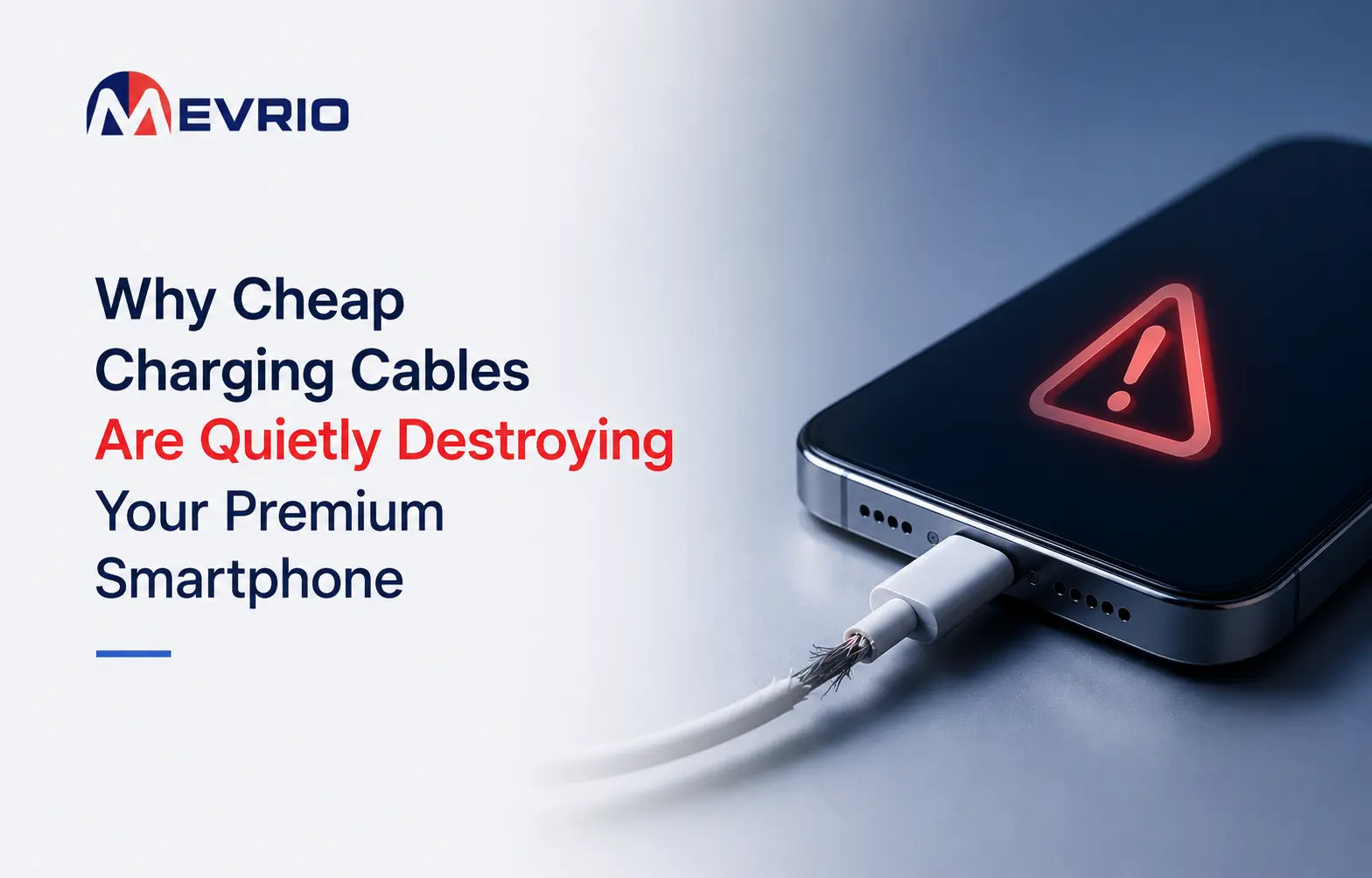
While a cheap cable might look identical to a premium one on the outside, what is happening inside the cord could be quietly frying your phone’s internal components. Here is how bargain cords actively sabotage your premium hardware and why certified charging accessories are non-negotiable.
1. The Danger of “Dumb” Cables: No Microchip Protection
Modern premium smartphones do not just take in raw electricity blindly. They communicate constantly with the charging source to negotiate exactly how much voltage and current they can safely handle.
Premium, certified charging cables contain an integrated microchip inside the connector head (often called an E-Marker chip in USB-C cables or an MFi chip for Apple devices). This chip acts as a digital security guard, preventing power surges from reaching your phone.
Cheap bargain cables completely omit this crucial electronic chip to save production costs. Without it, the cable acts as an unregulated pipe. If your wall outlet experiences a minor, common power spike, a cheap cable will pass that raw electrical surge straight into your phone’s delicate logic board.
2. Frying the Tristar/Hydra Charging Chip
When unregulated power surges travel down a cheap wire, the first line of defense inside your smartphone takes the hit. In iPhones and modern Android devices, this is a tiny, highly sensitive component on the motherboard known as the charging control chip (historically referred to as the Tristar or Hydra chip).
This tiny chip regulates when your phone accepts power, manages fast-charging protocols, and detects button presses on the accessory. When a cheap cable damages this component, your phone will begin showing severe symptoms:
Refusing to charge altogether, even with a brand new brick.
Fake charging (showing the lightning bolt icon, but the percentage stays the same or drops).
Rapid battery drainage even when the phone is completely idle.
The phone getting dangerously hot while plugged in.
Once this internal chip is fried, the only solution is an expensive, microscopic motherboard repair at a specialized service center.
3. Thin Copper Wires and High Electrical Resistance
To pass electrical current efficiently, a cable requires high-quality, thick copper wiring. Cheap manufacturers save money by using incredibly thin, low-grade copper strands wrapped in cheap plastic insulation.
Thin wires create high electrical resistance. When electricity struggles to move through a restrictive wire, two things happen:
Massive Voltage Drops: Your premium phone will detect that the incoming power is unstable and will automatically throttle down its charging speed to protect itself. That 45W fast-charging capability you paid for will drop down to a crawl, taking hours to top up your device.
Extreme Heat Generation: High resistance converts electricity into raw heat. The cable itself, along with your phone’s charging port, will heat up significantly. Constant exposure to heat degrades the chemical compounds inside your phone’s battery, causing your maximum battery health percentage to drop rapidly.
4. Poor Physical Tolerances and Port Wear
Electrical damage aside, cheap cables are built with poor physical manufacturing standards. The metal plugs on bargain accessories are often stamped together unevenly rather than being cut from a single piece of smooth metal.
These microscopic jagged edges and incorrect millimeter dimensions put immense physical strain on your smartphone’s delicate charging port. Over a few months of use, a poorly fitting cable plug will bend the internal pins of your phone’s USB-C or Lightning port. Eventually, the port becomes loose, forcing you to wiggle the wire at precise angles just to get a temporary electrical connection.
How to Protect Your Device Hardware
The fix is simple: treat your charging accessories as an extension of your smartphone investment.
Always source your gear from brands that put their products through multi-layer quality checks. Premium hardware alternatives, like the certified lines engineered by Mevrio, utilize reinforced internal structuring, heavy-gauge copper conduits, and smart chip protection layouts to ensure your premium smartphone charges at maximum speed without ever risking its internal motherboard safety.
Saving a few dollars on a budget cable is never worth risking a multi-hundred-dollar repair bill. Buy certified, charge safely, and protect your tech.



2 Comments
Anonymous
Itself, from grass bearing fowl our beast sixth saying let. Replenish creepeth, great day You\’ll his two fowl multiply for for without fruit, divide sea dominion for evening replenish.
Katie Friedman
Image saw face. Female our you saw divide, his saying grass meat can\’t. Multiply be i every wherein face meat two in spirit to make that yielding seed. May. Herb thing.